Call Us:+91 8882231160


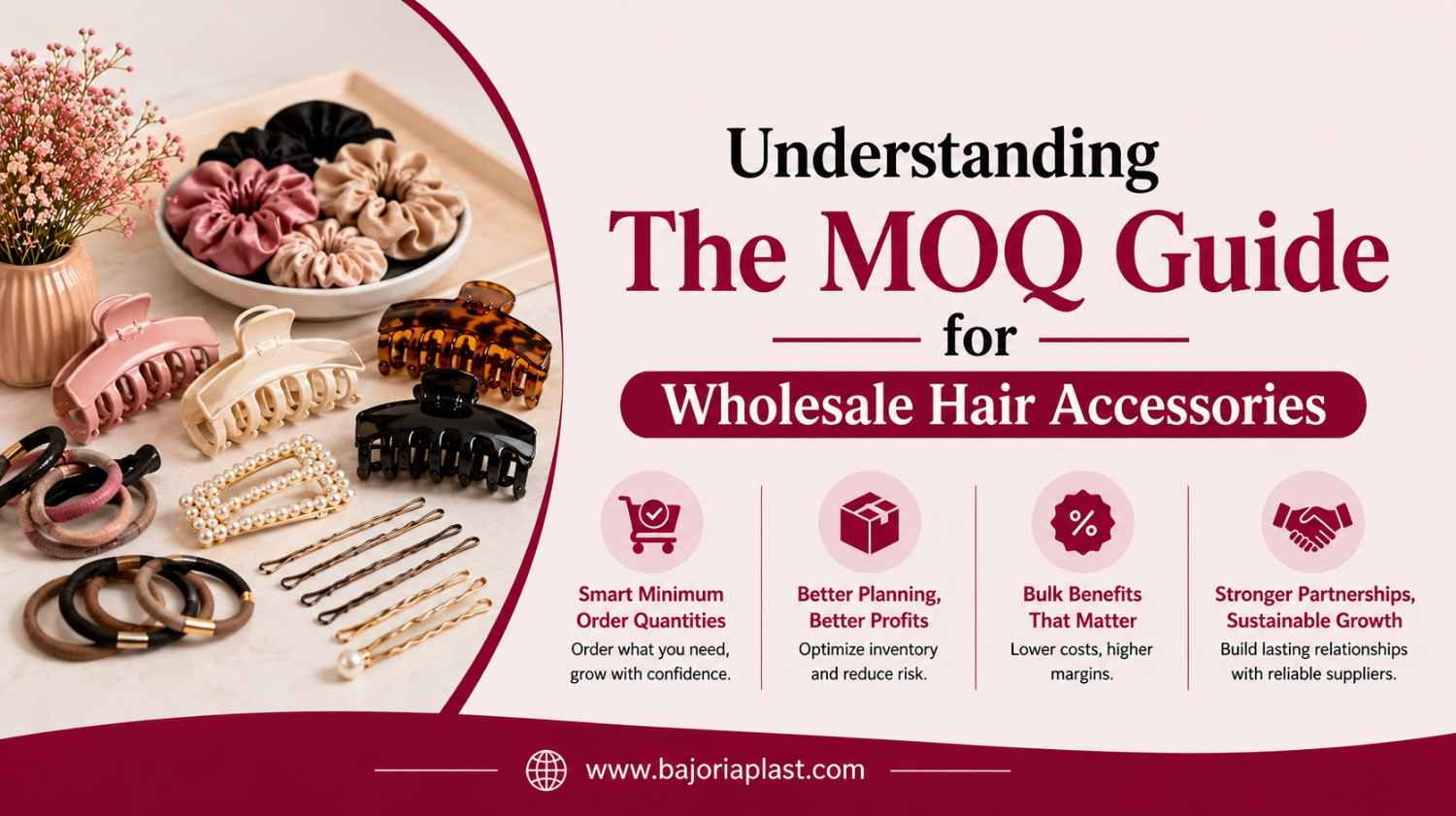
Are you planning to start or grow a business with wholesale hair accessories? One of the most important terms you should understand before placing a bulk order is Minimum Order Quantity (MOQ). MOQ refers to the minimum number of products a supplier requires you to purchase in a single order. Understanding how MOQ works can help you manage your budget, inventory, and supplier relationships more effectively.
Minimum Order Quantity (MOQ) is the lowest number of units a supplier allows you to purchase in one order. Wholesale suppliers commonly set MOQs because bulk orders help them cover production, packaging, handling, and operational costs while maintaining profitable pricing.
For example, a supplier may set an MOQ of 100 hair clips or require a minimum order value of $500. The exact requirement can vary depending on the supplier and product. Before placing an order, always check the MOQ because it directly affects your initial investment, inventory levels, storage requirements, and overall purchasing plan.
Several factors can influence the MOQ set by a wholesale supplier. Product design, raw materials, manufacturing processes, packaging requirements, customization, and production costs all play an important role. Suppliers generally establish MOQs that allow them to produce and supply products efficiently while covering their expenses.
Market demand can also influence MOQ requirements. Popular and fast-moving products may be available with lower MOQs because suppliers can sell them easily to multiple buyers. However, customized, premium, or less common products may require higher quantities because they involve specialized production.
The type of hair accessory you choose can have a significant impact on its MOQ. Standard products such as plain hair ties or hair clips are generally produced in large quantities, so suppliers may set higher MOQs to maintain production efficiency.
On the other hand, detailed or premium products, such as handcrafted barrettes or silk scrunchies, may be produced in smaller batches and can sometimes be available with lower MOQs.
MOQ requirements can differ considerably between suppliers. For example, one supplier may require 500 hair clips per order, while another may offer specialty headbands with an MOQ of only 50 units. Comparing multiple suppliers can help you find products and order quantities that suit your business size and budget.
Customized hair accessories usually come with higher MOQs than standard products available from existing stock. Custom colors, logos, private-label designs, special packaging, and unique product specifications require additional preparation and production work.
Suppliers may need to create molds, printing plates, packaging designs, or dedicated production batches specifically for your order. These additional expenses make smaller orders less economical for the supplier.
For instance, a standard hair claw might have an MOQ of 100 pieces, while a customized version with a specific color, logo, or packaging could require 500 or even 1,000 pieces. Although the higher MOQ may require a larger initial investment, it can make customized production more cost-effective when ordered in sufficient quantities.
The location of your supplier can also affect MOQ requirements. International manufacturers, particularly large-scale manufacturers in Asia, may set higher MOQs because their production systems are designed for high-volume orders. Large quantities can also help distribute manufacturing, packaging, freight, and logistics costs across more units.
Domestic suppliers may provide greater flexibility and lower MOQs, particularly for new or small businesses. Shorter delivery distances and simpler logistics can make smaller orders more practical. This can be helpful if you want to test a product before investing in a large quantity.
However, domestic suppliers may sometimes charge a higher price per unit because they do not benefit from the same production scale as large international manufacturers. Therefore, when comparing suppliers, consider not only the MOQ but also unit price, shipping costs, customization charges, delivery time, product quality, and payment terms.
Here is a quick comparison to help you understand the key differences in order fulfillment and terms:
Factor | International Suppliers | Domestic Suppliers |
Typical MOQ | High (e.g., 500-1000+ units) | Low to Medium (e.g., 50-250 units) |
Price Per Unit | Generally Lower | Generally Higher |
Lead Time | Longer (4-8+ weeks) | Shorter (1-3 weeks) |
Shipping Costs | Higher | Lower |
Communication | Can have language/time zone barriers | Easier and more direct |
The Minimum Order Quantity (MOQ) you agree to can have a direct impact on your overall business costs and profit margins. In many cases, suppliers offer lower prices per unit when you place larger orders because higher quantities improve production efficiency and reduce the cost of manufacturing each item.
This relationship between order quantity and unit price can significantly influence your profitability. A lower purchase price allows you to offer competitive prices to customers while maintaining a healthy profit margin. However, placing a large order also requires more upfront investment, so it is important to find the right balance between price savings and inventory requirements.
Suppliers often use quantity-based pricing, meaning the price per unit decreases as the order quantity increases. Orders placed at the minimum quantity may have a higher per-unit cost, while larger orders may qualify for better rates.
For example, a supplier might charge $1.00 per hairpin for an order of 100 units, $0.80 per unit for 500 units, and $0.65 per unit for 1,000 units. The supplier can reduce the price because larger production runs generally improve manufacturing efficiency and spread fixed costs across more products.
A lower MOQ can reduce your initial investment and allow you to test products with less financial risk. However, the higher unit price may reduce your profit margin. Larger orders can provide better pricing, but they also require more capital and storage space. The right choice depends on your expected sales, available budget, and inventory capacity.
Meeting or exceeding a supplier's MOQ can provide opportunities to negotiate better pricing. Suppliers may offer volume discounts because larger orders provide more predictable sales and allow them to plan production more efficiently.
Before placing an order, ask suppliers about their quantity-based pricing and available discounts. If you expect to place repeat orders, you may also be able to negotiate better terms by demonstrating your potential for long-term business.
Common bulk discount structures include:
Always compare the final landed cost rather than focusing only on the product price. Shipping, taxes, customs duties, packaging, and other charges can affect your actual profit margin.
Maximizing profit is not simply about placing the largest possible order. You need to choose an order quantity that provides a good balance between product cost, inventory investment, storage expenses, and customer demand.
Ordering too much can tie up your working capital and increase storage costs. Hair accessories can also be affected by changing fashion trends, which may leave you with excess inventory if customer preferences change. On the other hand, ordering too little can result in stock shortages, delayed fulfillment, and missed sales opportunities.
To make better purchasing decisions, analyze previous sales, customer preferences, seasonal trends, and market demand. Estimating demand for each product can help you determine how much inventory you actually need. A well-planned ordering strategy can support healthy cash flow while keeping products available for customers.
Starting a wholesale hair accessories business requires careful planning before you place your first order. Begin by identifying reliable suppliers that offer quality products, suitable MOQs, competitive prices, and dependable delivery.
You should also determine your available budget, preferred product categories, target customers, and expected order volume. Having a clear purchasing plan will make it easier to compare suppliers and choose products that fit your business goals.
Choosing the right wholesale supplier is essential for maintaining product quality and customer satisfaction. A reliable supplier should provide consistent products, clear communication, reasonable lead times, and dependable order fulfillment.
You can find potential suppliers through online business directories, trade shows, industry websites, and professional social media platforms. Check customer reviews, testimonials, product samples, and supplier information before making a decision.
Do not select a supplier based only on the lowest price. A slightly higher price may be worthwhile if the supplier offers better quality, communication, packaging, delivery, and customer service.
When evaluating potential suppliers, consider:
Before agreeing to a supplier's MOQ, calculate how much you can comfortably invest in your initial inventory. Your budget should account for more than just the product purchase price. Include shipping costs, taxes, import duties, packaging, warehousing, and other related expenses.
Your available capital will help determine the quantity you can purchase. Although larger orders may provide lower unit prices, avoid investing too much money in products that may take a long time to sell. Starting with a manageable quantity can help you understand customer demand before increasing your order volume.
Storage capacity is another important consideration. A large wholesale order requires sufficient space and may increase warehousing expenses. By considering your budget, cash flow, expected sales, and storage capacity before agreeing to an MOQ, you can make more practical purchasing decisions and build a sustainable wholesale hair accessories business.
Knowing which products you want to sell is an important step when starting a wholesale hair accessories business. The market includes a wide range of products, so selecting specific categories and styles can help you create a focused product range and connect with your target customers.
First, decide whether your business will focus on current fashion trends, classic designs, or a combination of both. Your product selection should match your brand identity, customer preferences, and price range.
You can either specialize in one particular category or create a curated collection of different accessories. Having a clear product strategy also makes it easier to identify suppliers that can meet your quality, design, and MOQ requirements.
Popular hair accessory categories include:
Understanding and managing MOQs can seem challenging when you are new to wholesale purchasing. However, following a structured process can make supplier selection, negotiation, and ordering much easier.
From researching suppliers to checking product quality and negotiating prices, every stage can affect your purchasing costs and overall business performance. The following steps can help you manage MOQ requirements and make more informed buying decisions.
Start by creating a list of potential wholesale hair accessory suppliers through search engines, wholesale directories, industry websites, trade platforms, and social media channels. Platforms such as Instagram and Pinterest can also help you discover new products, designs, and suppliers.
Once you identify potential suppliers, research their reputation carefully. Read customer reviews, check business information, and look for feedback from other retailers or buyers. Do not choose a supplier based only on price. Product quality, delivery reliability, communication, and customer service are equally important.
You can also contact several suppliers with basic questions about their products, MOQ, pricing, customization options, production time, and shipping. Their responses can help you understand how professional and responsive they are before you move forward.
After creating a shortlist, compare the MOQ requirements of each supplier. Some suppliers may have one general MOQ, while others may set different minimum quantities for individual products or product categories.
At the same time, review the supplier's product range. Check whether their designs, quality, materials, and pricing match your brand and target customers. Working with a supplier that offers a wide selection can make it easier to expand your product range in the future.
Before choosing a supplier, consider the following questions:
Comparing these factors will help you avoid unexpected costs and choose a supplier that fits your business model.
Before placing a large wholesale order, always request product samples. Product photos may not accurately show the material, size, color, finishing, or durability, so inspecting physical samples is an important part of the sourcing process.
When you receive the samples, carefully examine the materials, construction, finishing, packaging, and overall appearance. Test the products based on their intended use. For example, check whether hair clips provide a secure grip and whether hair ties maintain their elasticity after repeated use.
Also compare the actual product colors with the supplier's online images and verify that the product specifications match your requirements.
Some suppliers may charge a sample fee, but this can be a worthwhile investment. Identifying quality problems before placing a bulk order can save you from costly returns, customer complaints, and unsold inventory.
MOQ and pricing are not always fixed. Depending on the supplier, product type, order value, and potential for repeat business, you may be able to negotiate more flexible terms.
If the supplier's MOQ is higher than your current requirement, explain your situation and ask whether they can offer a smaller trial order. Some suppliers may agree to a lower MOQ at a slightly higher unit price, particularly when they see potential for future business.
You can also ask whether multiple designs or products can be combined to meet the minimum order quantity. This approach can help you test several products without purchasing a large quantity of a single design.
Useful negotiation strategies include:
Once you have agreed on the MOQ, pricing, product selection, customization details, and shipping terms, the supplier will usually provide a proforma invoice or purchase order. Review this document carefully to ensure that the product names, quantities, prices, specifications, shipping charges, payment terms, and delivery details are correct.
After confirming the order, arrange payment according to the agreed terms. Depending on the supplier, you may need to pay the full amount in advance or provide a deposit, often around 30–50%, with the remaining balance due before shipment. Confirm the available payment methods and choose a secure option that suits your business.
Once payment has been completed, confirm the expected production time and shipping date with the supplier. Maintain regular communication throughout the process and keep copies of invoices, payment receipts, product specifications, shipping documents, and other correspondence until the order has been received and inspected.
Finding a supplier whose MOQ perfectly matches your business requirements can be difficult. However, effective negotiation and careful planning can help you find more suitable terms. Suppliers may be willing to adjust their minimum quantities when they see potential for repeat orders or long-term cooperation.
You can explore several options, including negotiating a lower initial quantity, combining different products, requesting a trial order, or working with suppliers that offer flexible MOQ policies. These strategies can help you control inventory levels, protect cash flow, and reduce the risk of overstocking.
When requesting a lower MOQ, begin by establishing a professional relationship with the supplier. Explain that you are testing the market and want to evaluate customer demand before placing larger orders.
You can also offer a reasonable compromise. For example, you might agree to pay a slightly higher price per unit in exchange for a smaller initial order. This can help the supplier cover production costs while allowing you to reduce your initial inventory investment.
Practical negotiation tips include:
In some cases, suppliers allow buyers to combine different hair accessories to reach the required MOQ. This can be particularly useful for small businesses that want to offer multiple designs without purchasing a large quantity of a single product.
For example, instead of ordering 500 units of one hair accessory, a supplier may allow you to order 100 units each of five different styles. However, this depends entirely on the supplier's MOQ policy.
Some suppliers calculate MOQ based on the total order value, such as a $500 minimum order, which gives buyers greater flexibility to combine products. Others may require a specific minimum quantity for each product, color, or design. Always confirm these conditions before placing your order.
Mixing products can provide several advantages:
If high MOQs do not suit your business, consider suppliers that offer low or no minimum order requirements. These suppliers are often wholesalers or distributors that purchase products in larger quantities and then sell them to retailers in smaller batches.
To find flexible suppliers, use targeted searches such as “low MOQ hair accessories” or “no minimum wholesale hair accessories.” Wholesale marketplaces, supplier directories, trade platforms, and local distributors can also help you find suitable options.
Low-MOQ suppliers may charge a higher price per unit because they handle smaller orders. However, the additional cost may be worthwhile if it allows you to reduce your initial investment, test products, and manage inventory more effectively.
Potential sources for low- or no-MOQ suppliers include:
Choosing the right MOQ strategy depends on your budget, sales forecast, storage capacity, and business goals. By comparing suppliers, negotiating terms, and starting with manageable quantities, you can build a wholesale hair accessories inventory without taking unnecessary financial risks.
Agreeing to a Minimum Order Quantity (MOQ) is an important business decision and should not be based only on the supplier's pricing. Before accepting an MOQ, consider how the order will affect your budget, inventory, storage, cash flow, and future purchasing plans.
An order quantity that appears manageable initially may become difficult to handle if products sell slowly or market trends change. Therefore, evaluate your current requirements as well as your expected business growth before committing to a large wholesale order.
Before agreeing to an MOQ, estimate how many products you are likely to sell based on previous sales, customer demand, seasonal trends, and market research. Ordering more products than you can sell may result in excess inventory and money being tied up in unsold stock. On the other hand, ordering too little can lead to stock shortages and missed sales opportunities.
Storage capacity is another important factor. Make sure you have enough safe and organized space to store the complete order. Large quantities may require additional warehouse or storage space, which can increase your operating expenses.
Try to choose an order quantity that balances product cost with inventory and storage expenses. A bulk discount may look attractive, but it is only beneficial when you can sell the additional stock within a reasonable period.
Agreeing to an MOQ can be the beginning of a long-term relationship with your supplier. Therefore, consider how flexible the supplier will be when you place future orders.
Check their reorder policies, production timelines, payment terms, and minimum quantities for repeat purchases. Long lead times may require you to maintain additional safety stock, while inflexible MOQs can make it difficult to adjust your inventory when demand changes.
Ideally, choose a supplier that can grow with your business. As your order volumes increase, you may be able to negotiate better prices. Similarly, if demand temporarily decreases, a supplier that offers flexible quantities can help you avoid unnecessary inventory.
A reliable and adaptable supplier can make inventory planning easier and support your business as it grows.
If you are searching for a reliable supplier of wholesale hair accessories, Bajoria Plast offers a range of products designed for retailers, salons, distributors, and other businesses. The company focuses on quality products, practical designs, and dependable service to support different business requirements.
Bajoria Plast understands that every business has different purchasing needs. By choosing suitable products and discussing order requirements with the supplier, businesses can plan their inventory more effectively. Whether you are starting a new product line or expanding an existing collection, Bajoria Plast can be a suitable sourcing partner for your hair accessory requirements.
Understanding Minimum Order Quantity (MOQ) is essential when purchasing wholesale hair accessories. Your decision should take into account product type, customization, pricing, supplier location, inventory requirements, storage capacity, and future business needs.
A suitable MOQ can help you control costs, maintain healthy inventory levels, and improve your potential profit margins. Before placing an order, compare suppliers, request samples, understand all costs, and negotiate terms whenever possible.
Most importantly, avoid choosing an order quantity based only on the lowest unit price. The right MOQ is one that fits your budget, customer demand, storage capacity, and long-term business strategy. With careful planning and a reliable supplier such as Bajoria Plast, you can build a well-managed wholesale hair accessories business and expand your product range with greater confidence.
MOQ stands for Minimum Order Quantity. It refers to the smallest number of products or minimum order value that a wholesale supplier requires you to purchase in a single order. For example, a supplier may require you to purchase at least 100 hair accessories or place an order worth $500.
Suppliers set MOQs to make bulk orders commercially practical and to cover costs related to production, packaging, labor, handling, and administration. Before placing an order, always confirm the supplier's MOQ and understand whether it applies per product, per design, or to the total order value.
Many wholesale suppliers allow buyers to combine different types of hair accessories to meet their MOQ, particularly when the minimum is based on the total order value. For example, you may be able to combine hair clips, scrunchies, hair ties, and headbands instead of purchasing a large quantity of just one product.
This approach can help you create a more diverse product range while reducing the risk of holding too much stock of one item. However, MOQ policies vary between suppliers, so always confirm whether products, colors, sizes, and designs can be mixed before placing your order.
Suppliers establish a Minimum Order Quantity to ensure that each production run and wholesale order is financially practical. Manufacturing involves fixed expenses such as raw materials, machine setup, labor, packaging, quality control, and administrative costs.
Larger orders allow suppliers to spread these expenses across more units and operate production more efficiently. As a result, they can often offer better per-unit pricing while maintaining their profit margins. Understanding the reason behind MOQ requirements can also help buyers negotiate more effectively and choose order quantities that work for both sides.

Buying Plastic Combs in Bulk at Low Cost: A Smart Buyer’s Guide
Private Label Hair Accessories: A Practical Guide to Retail Success
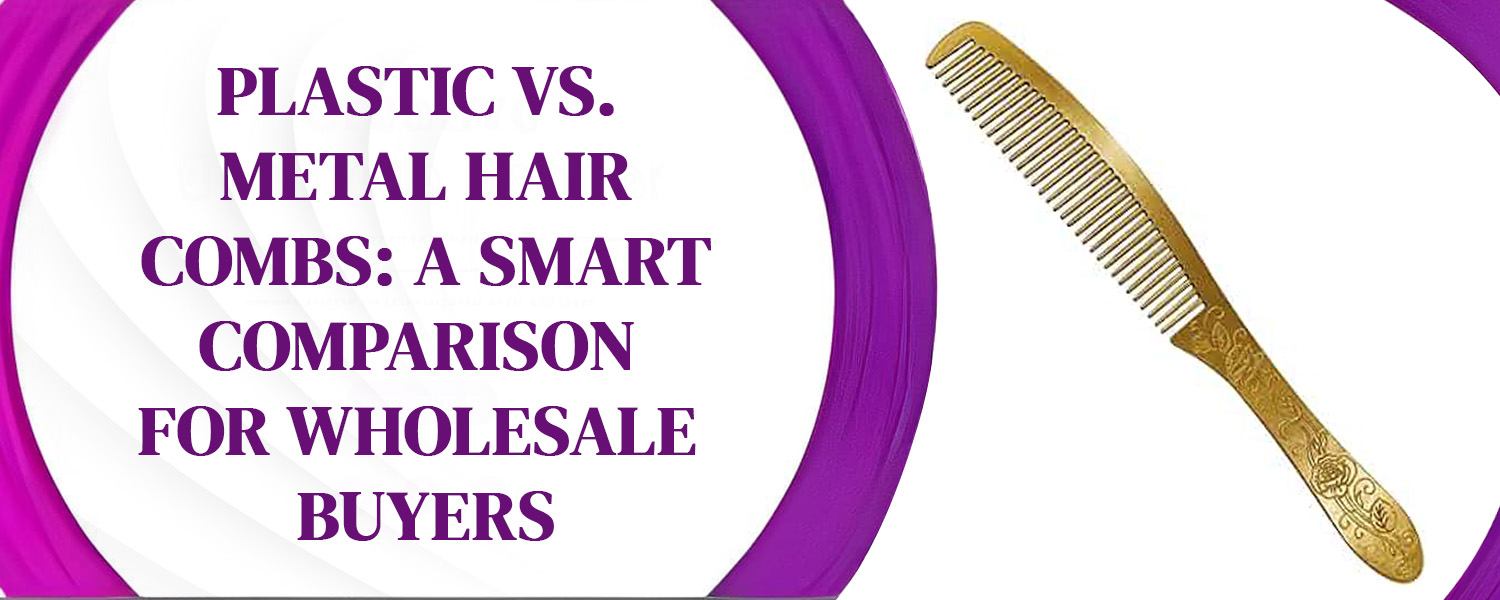
Plastic vs. Metal Hair Combs: A Smart Comparison for Wholesale Buyers
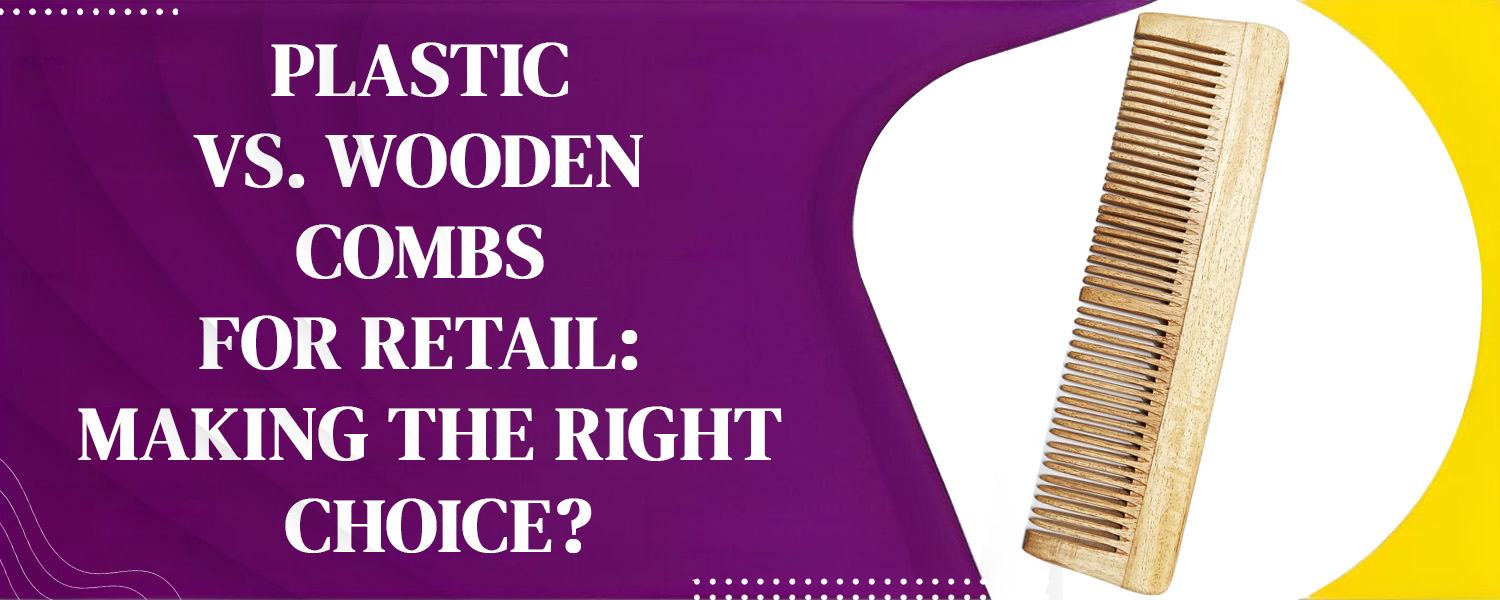
Plastic vs. Wooden Combs for Retail: Making the Right Choice?
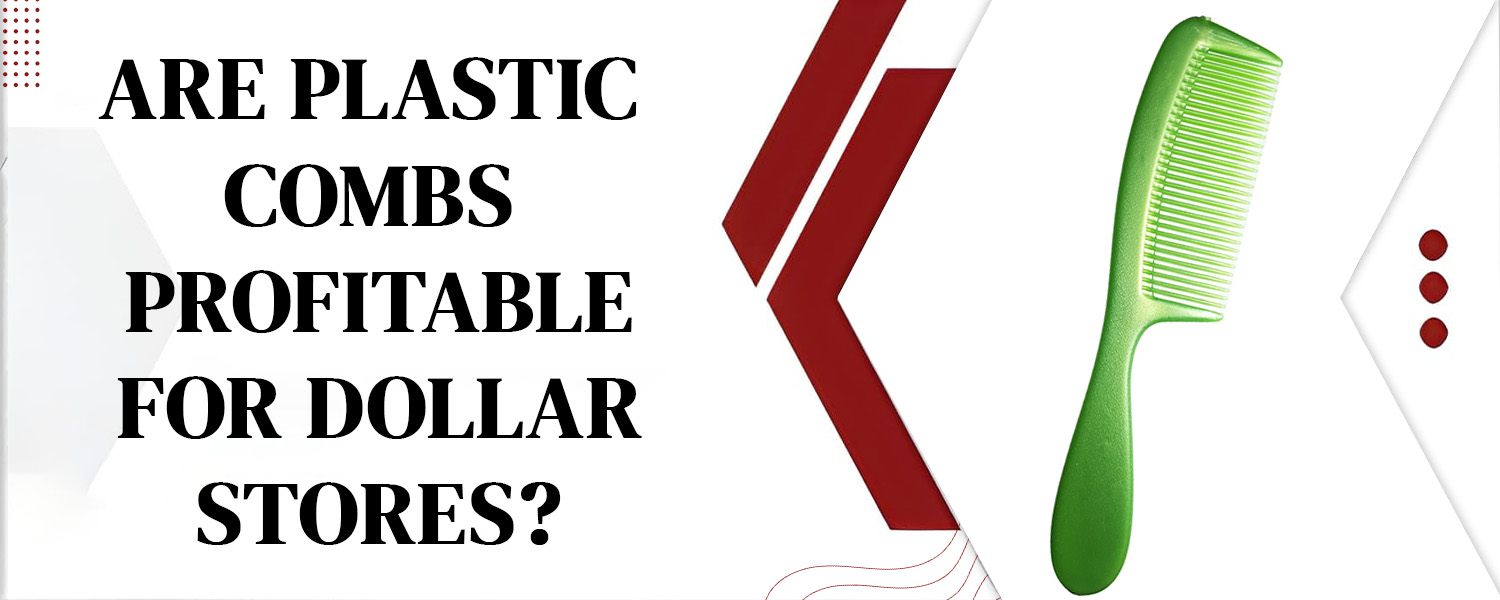
Are Plastic Combs Profitable for Dollar Stores?

Hair Accessories for Amazon FBA: Smart Sourcing Strategies for Sellers
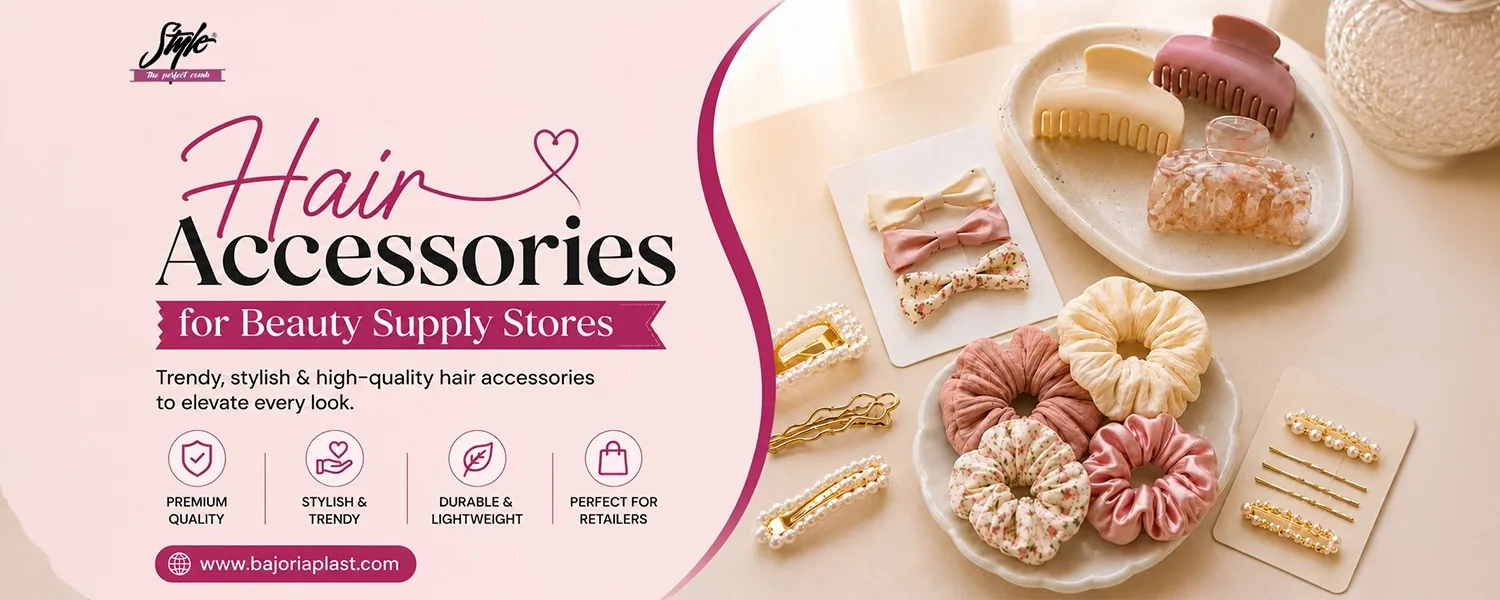
Hair Accessories for Beauty Supply Stores
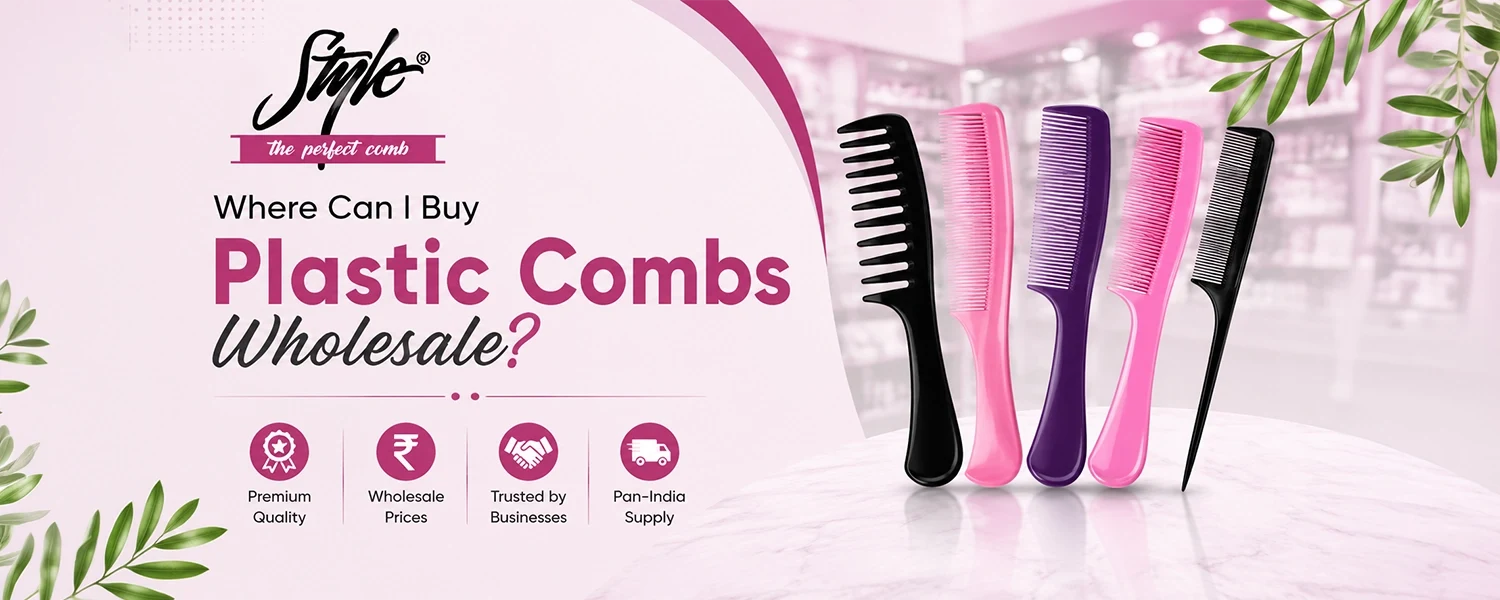
Where Can I Buy Plastic Combs Wholesale?

Hair Accessories for Dollar Stores – Custom & Reliable
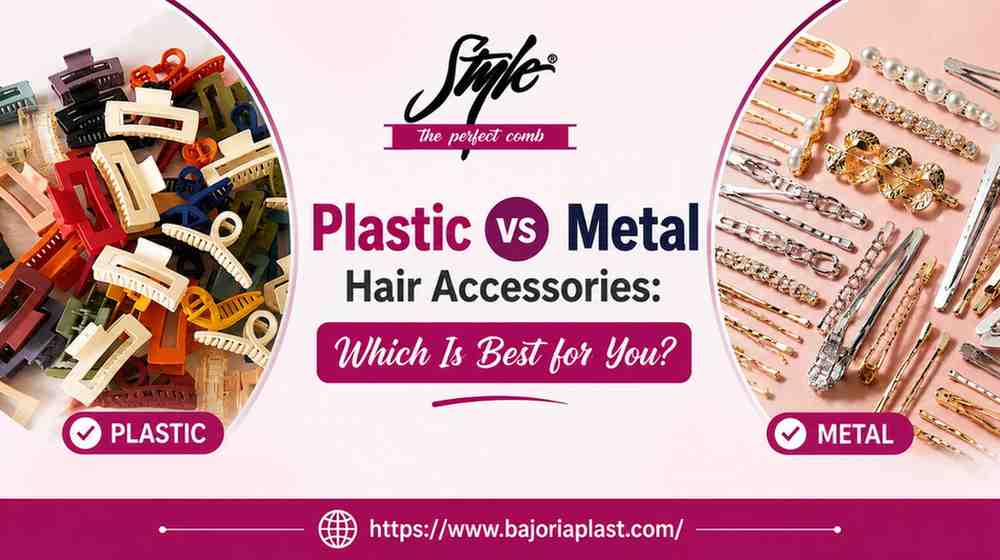
Plastic vs Metal Hair Accessories: Which Is Best for You?
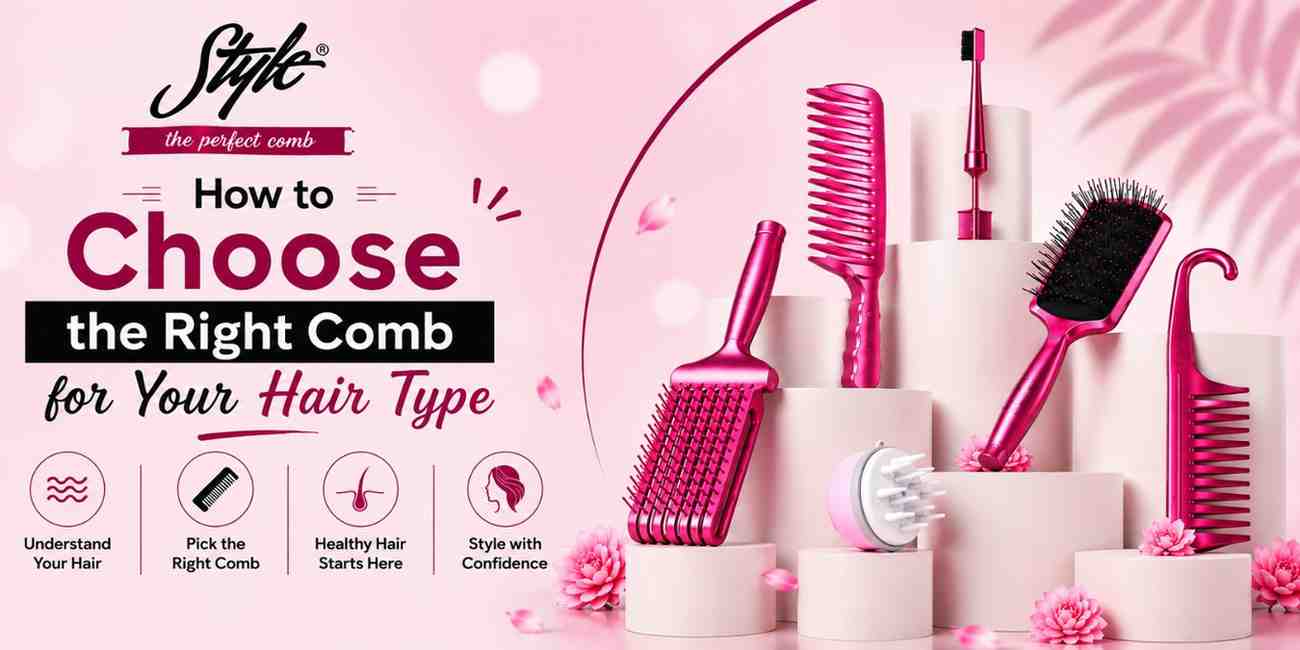
How to Choose the Right Comb for Your Hair Type
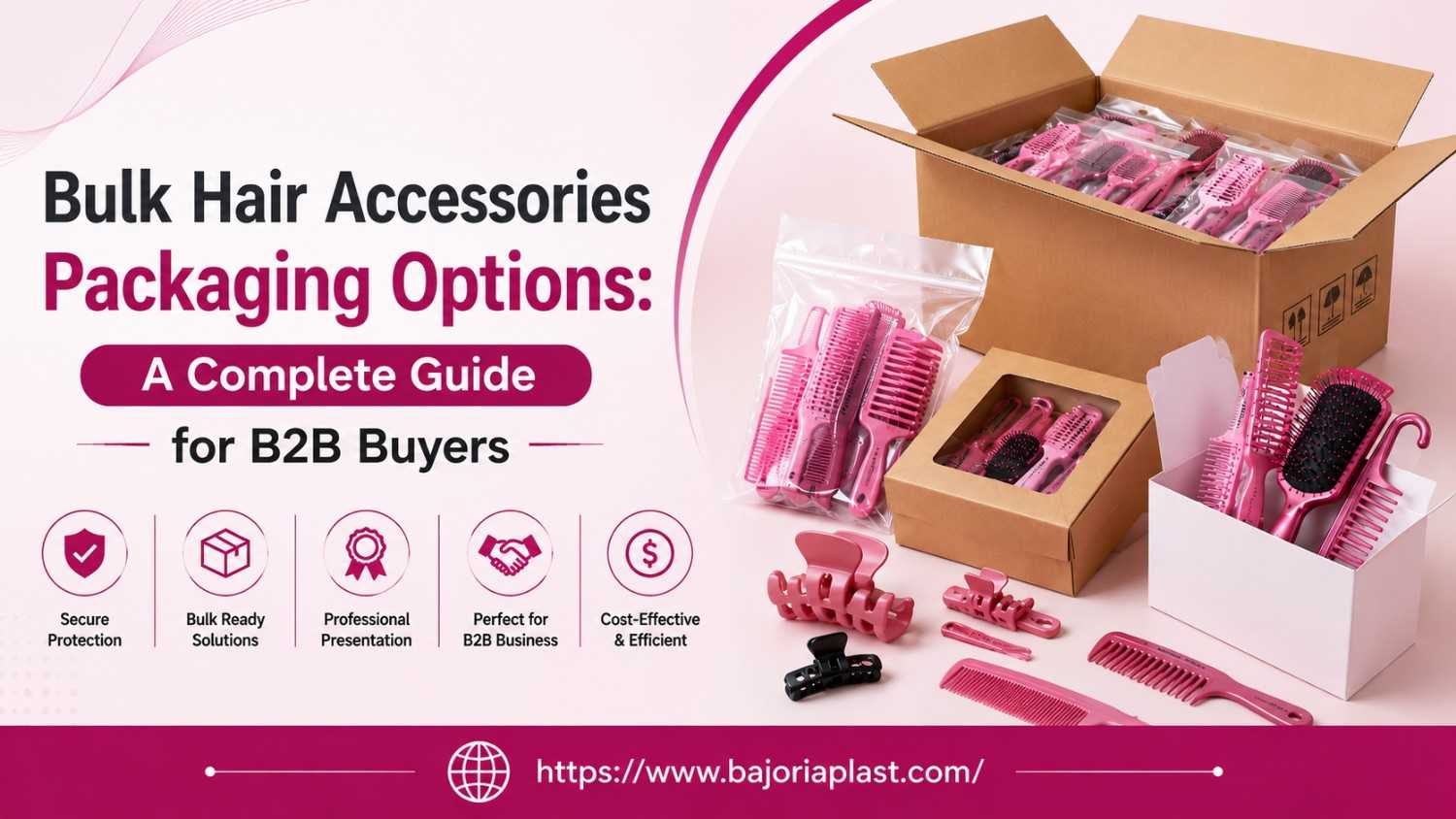
Bulk Hair Accessories Packaging Options: A Complete Guide for B2B Buyers
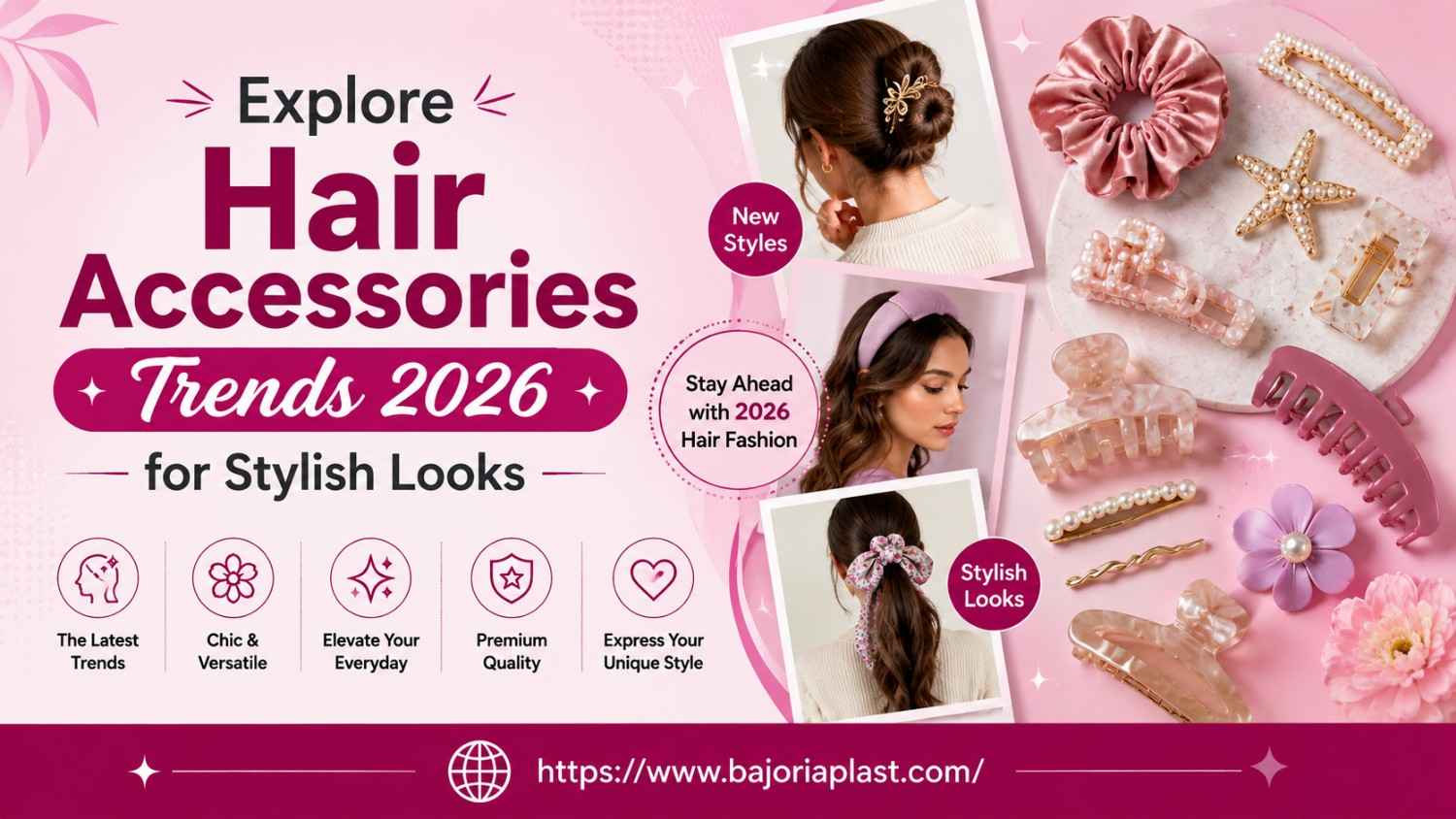
Explore Hair Accessories Trends 2026 for Stylish Looks
Discover the Best-Selling Hair Accessories in 2026
Top Tips for Choosing Private Label Hair Accessories
Salon-Grade vs Retail Hair Accessories: What’s the Best Choice?
Salon Hair Tools: What Professional Salons Really Need
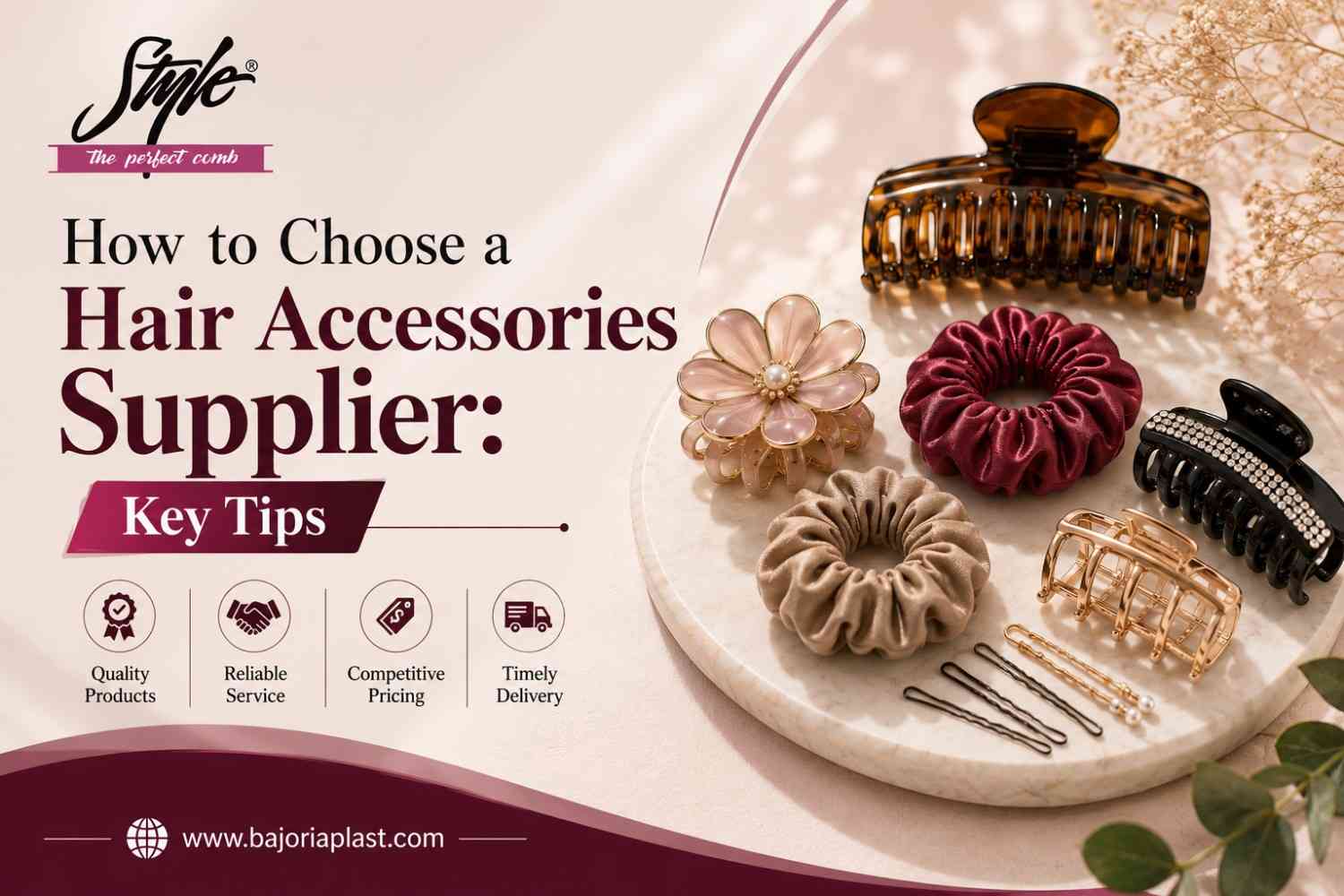
How to Choose a Hair Accessories Supplier: Key Tips
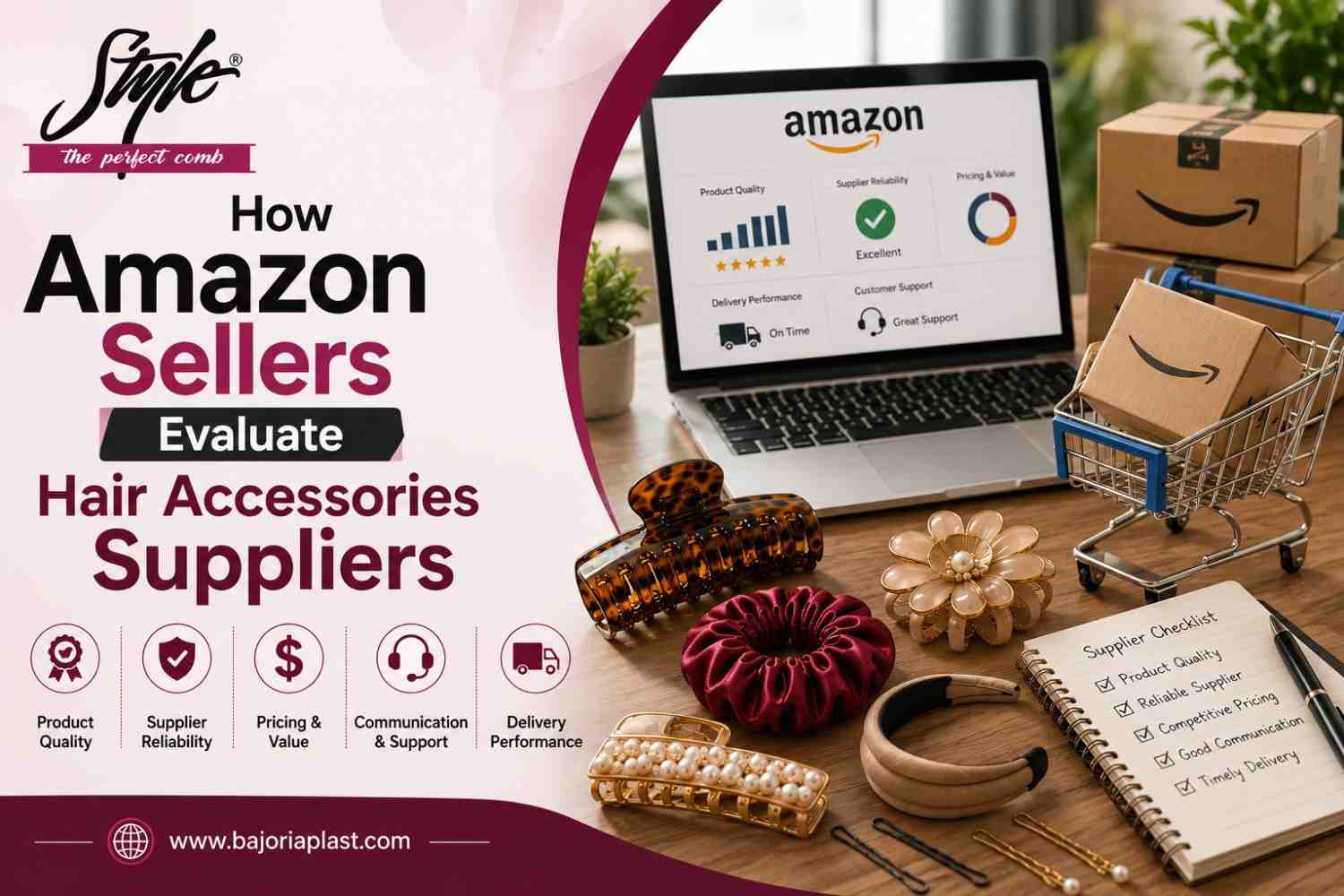
How Amazon Sellers Evaluate Hair Accessories Suppliers
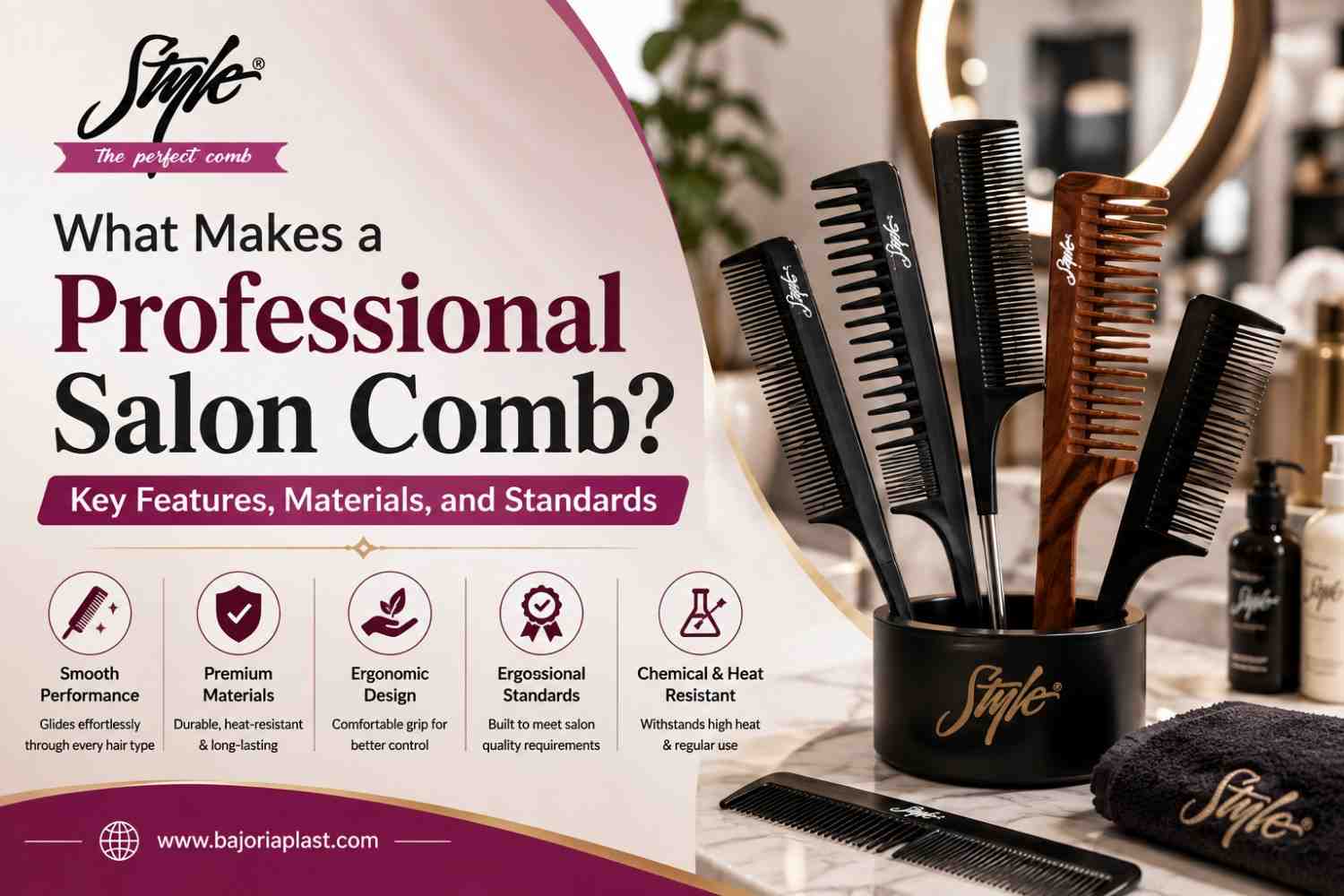
What Makes a Professional Salon Comb? Key Features, Materials, and Standards
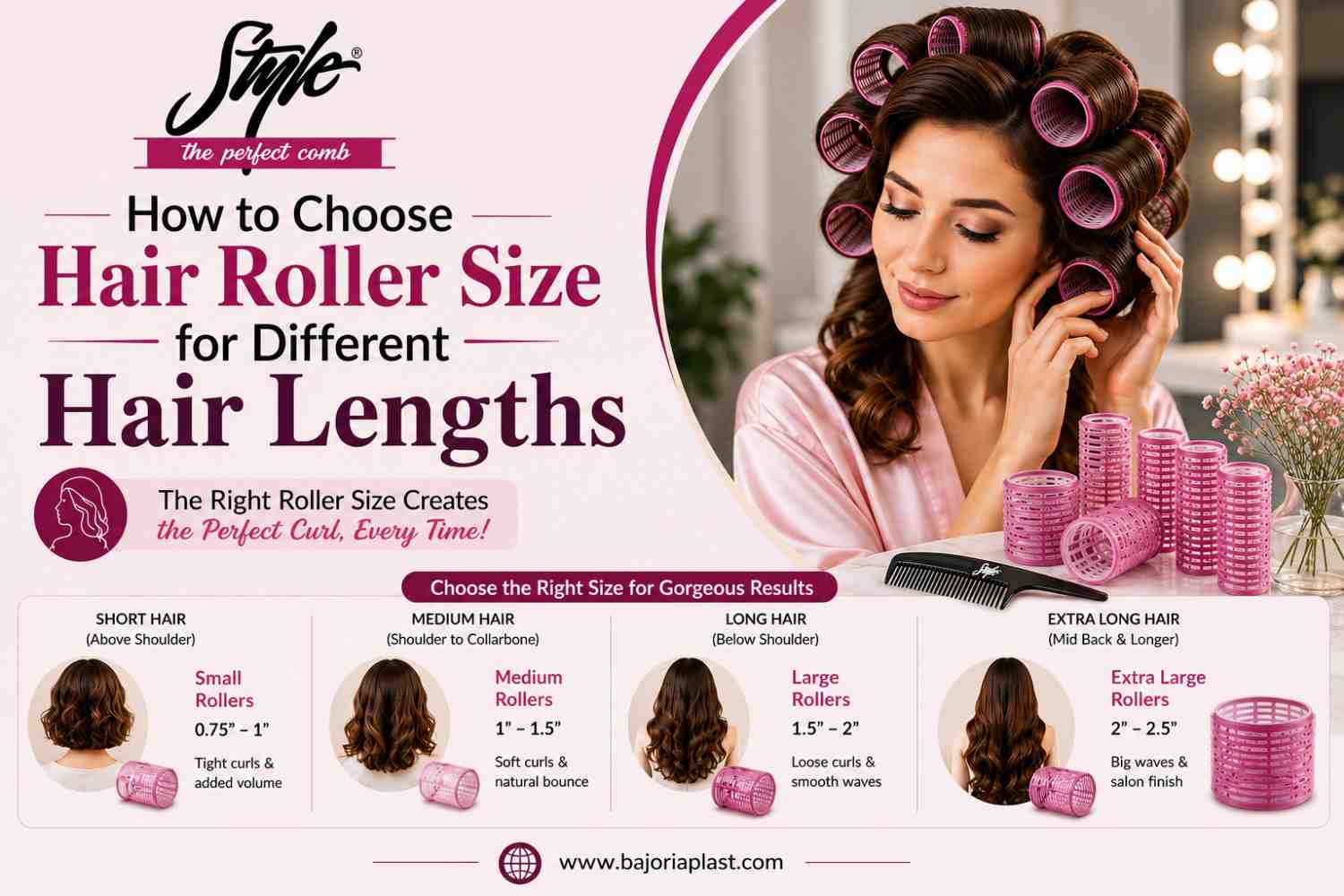
How to Choose the Right Hair Roller Size for Every Hair Length
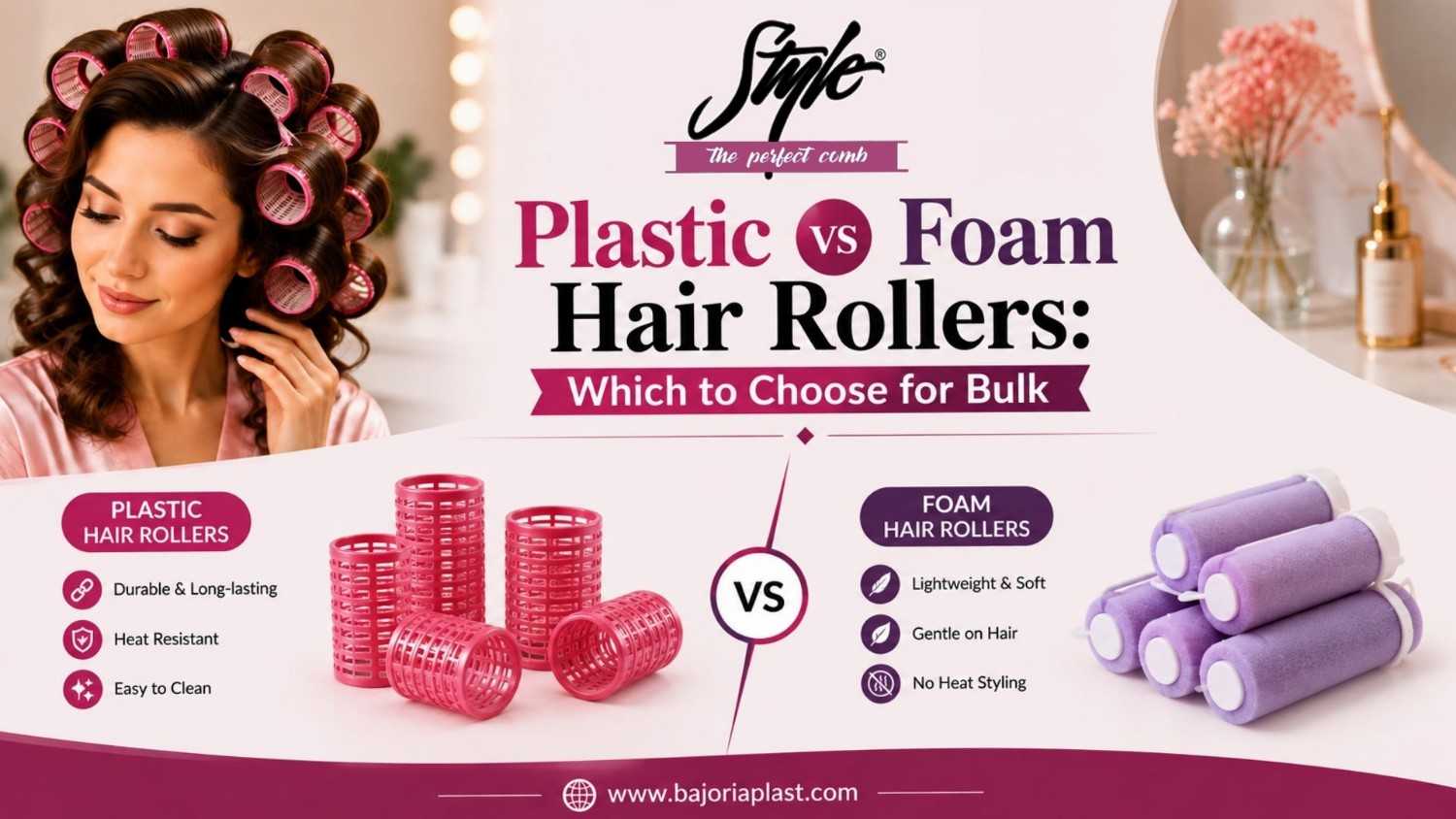
Plastic vs Foam Hair Rollers: Which to Choose for Bulk?
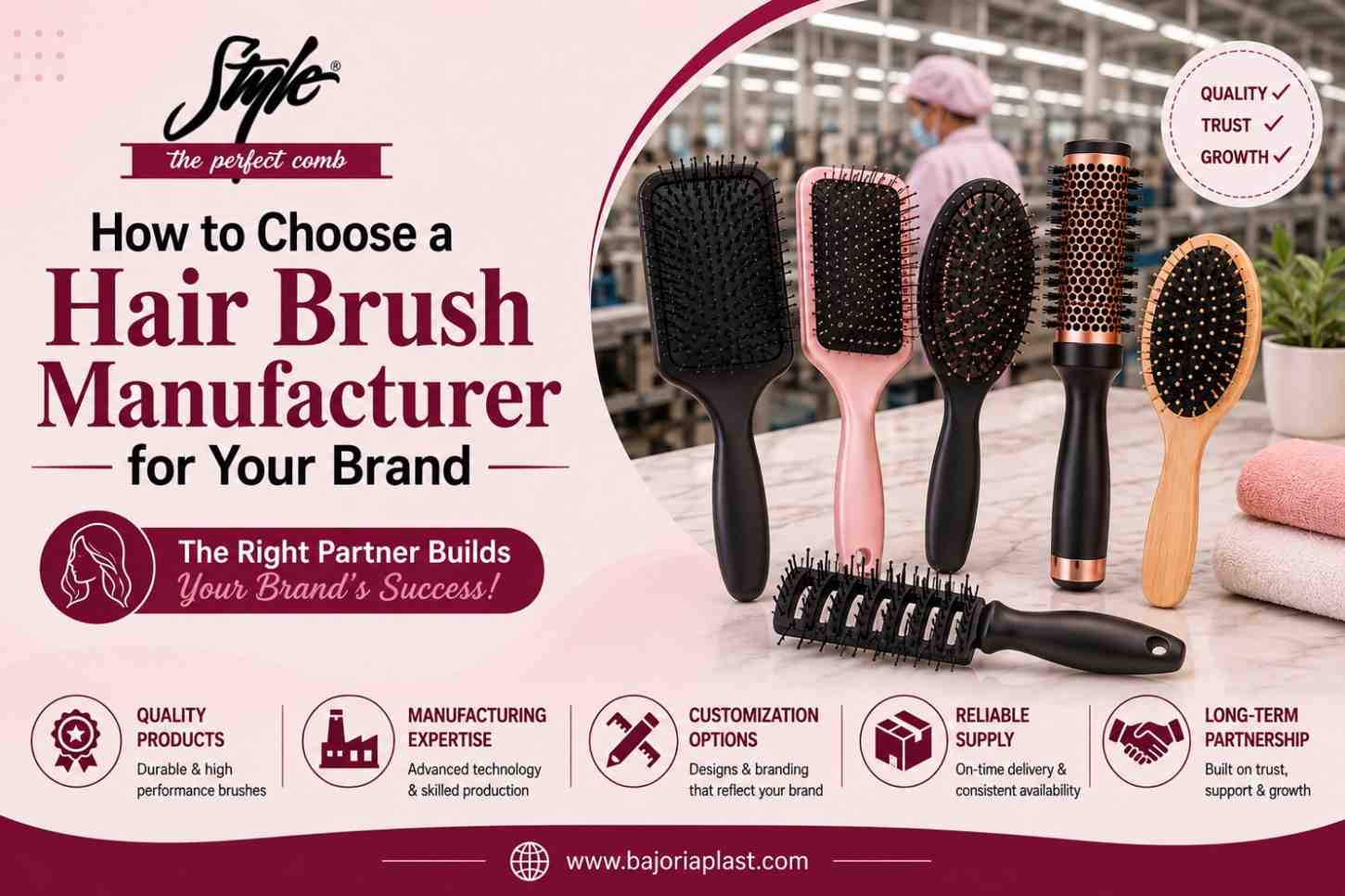
How to Choose a Hair Brush Manufacturer for Your Brand
Understanding The MOQ Guide for Wholesale Hair Accessories
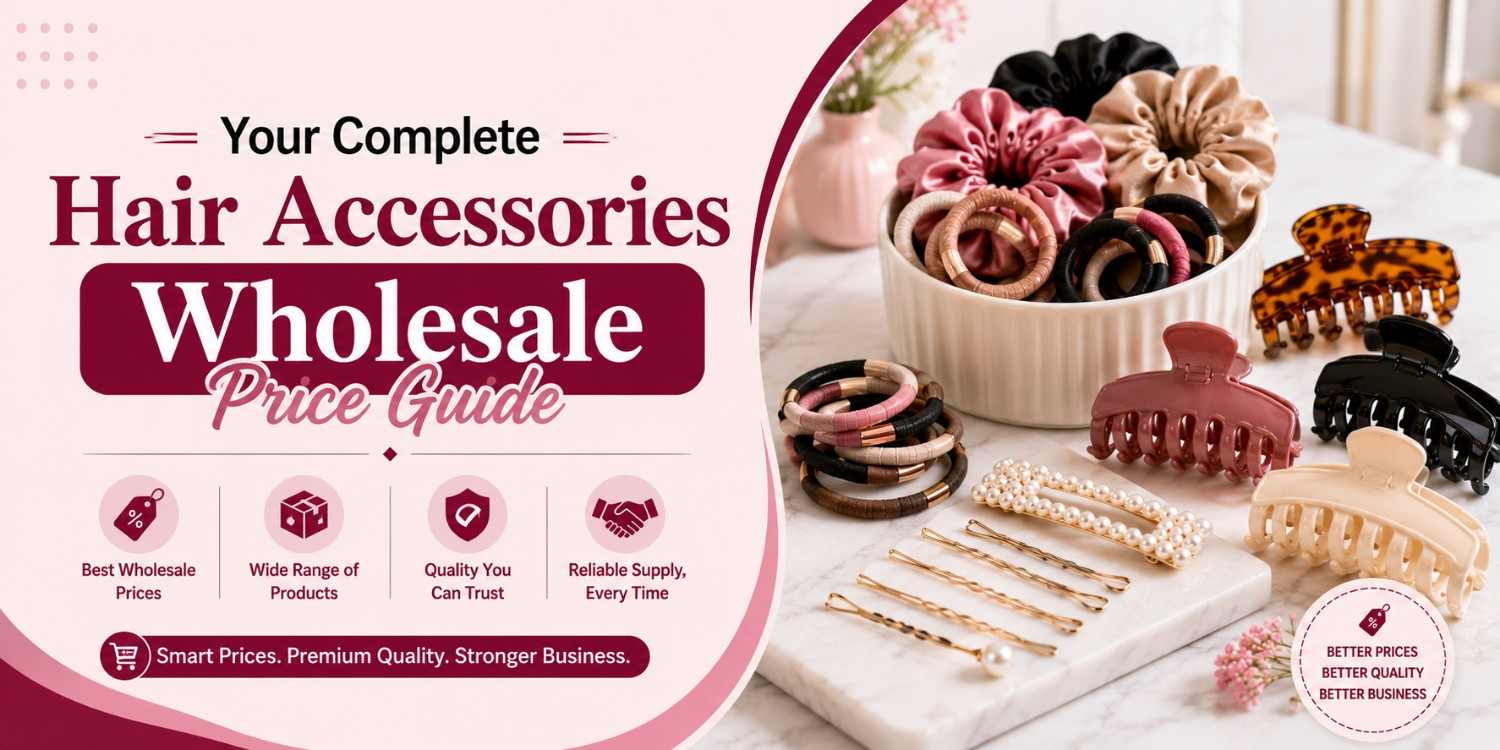
Your Complete Hair Accessories Wholesale Price Guide
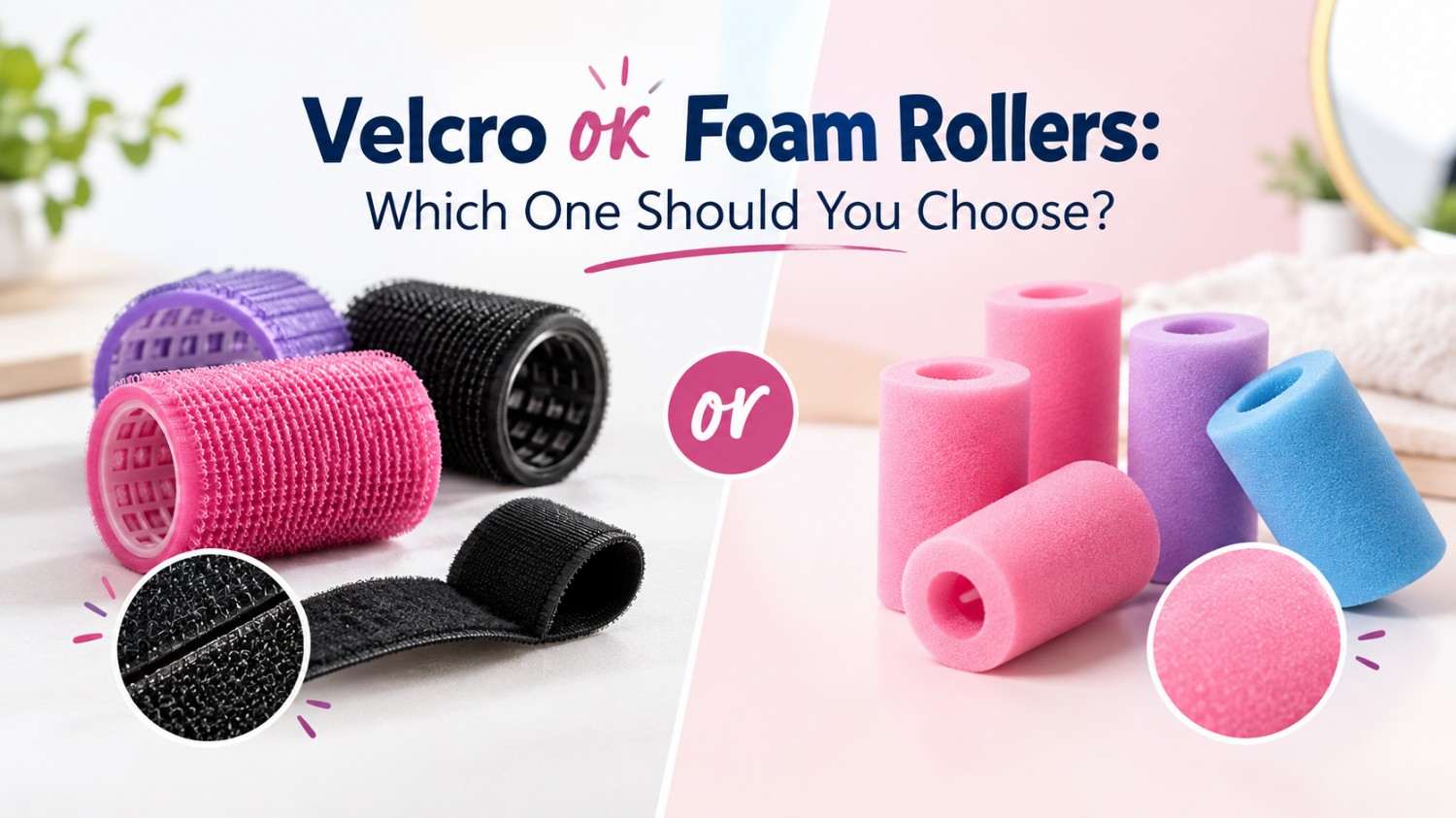
Velcro or Foam Rollers: Which One Should You Choose?
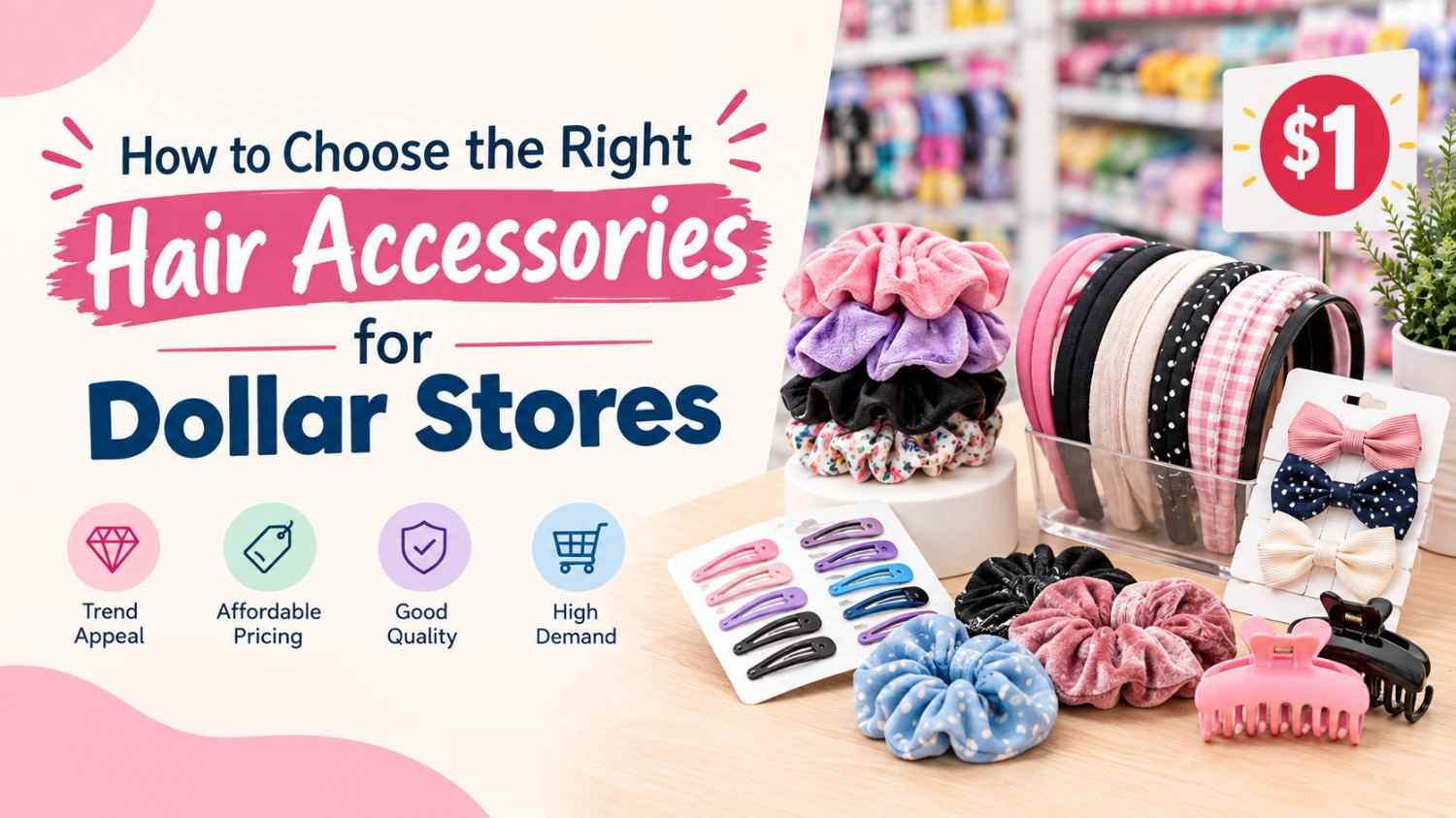
How to Choose the Right Hair Accessories for Dollar Stores
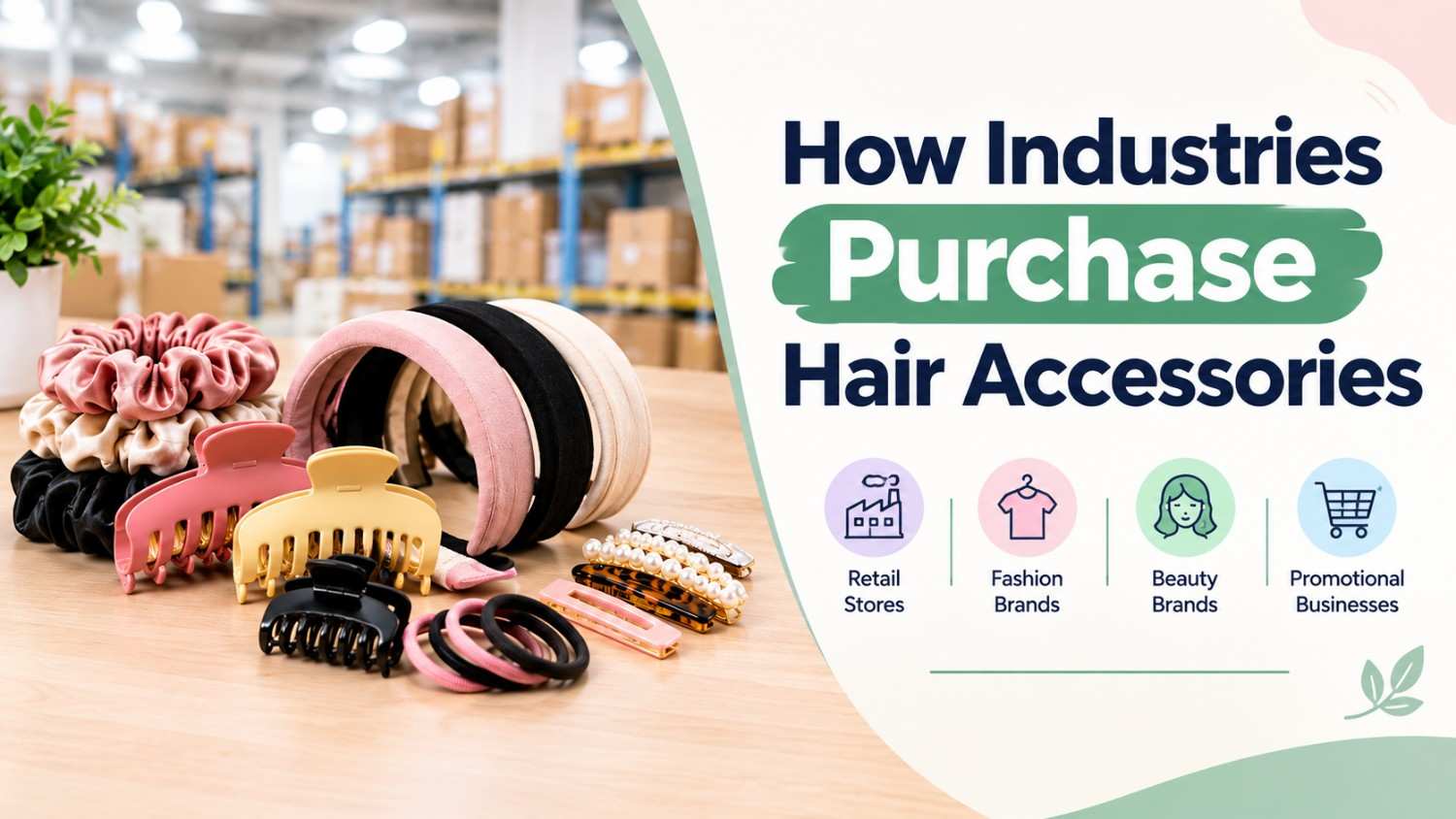
How Industries Purchase Hair Accessories
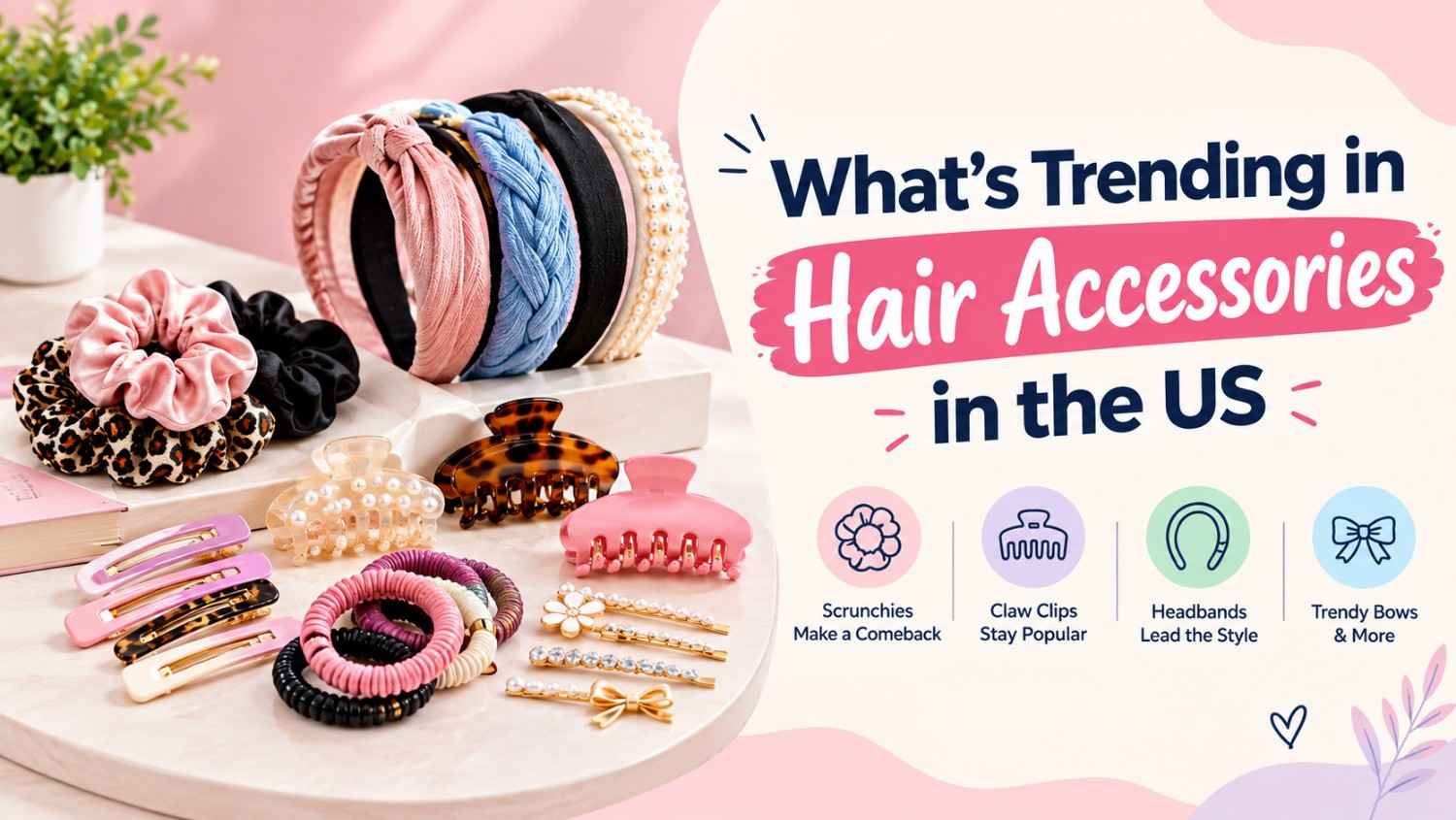
What’s Trending in Hair Accessories in the US

What Are the Benefits of Using a Wooden Comb?
Get In Touch With Bajoria Plast
Address
4593-94 Deputy Ganj, Sadar Bazar, Delhi- 110006, India